
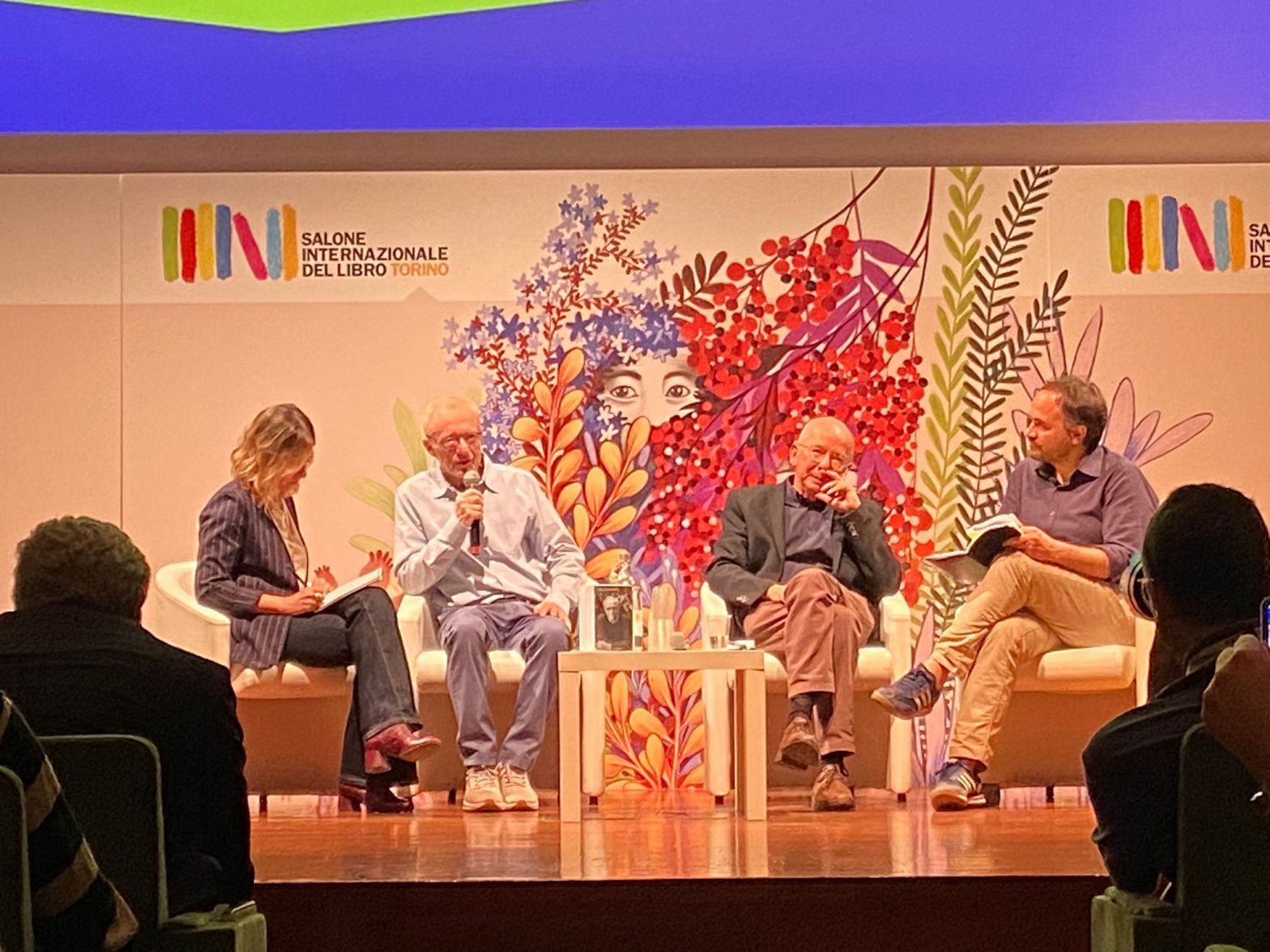
In the event of the publication of “Opere. Vol. 1-2” (Meridiani Mondadori), today the 17th of may, the Israeli author David Grossman retraced his career as a writer during a panel with the Wlodek Goldkorn, allowing the public to see flashes of his incredibly profound character.
Throughout the talk, it became extremely evident that he had spent much time reflecting on his works, although if himself admits the complexity of analyzing something of his own production. He views his books as a documentation of the different stages of his life, permitting him to reminisce about the greatest events of his past. It is interesting, as he says, to compare the intimate relationship he has with his own work with the relationship that the general public has. The connection an author has with what he writes is tormented and complex: there is a constant push and pull, a resistance from the writer to surrender to the story and let himself be dragged away from the flow of the narrative. It is one of the thing Grossman says to have learned, to “use less words and trust the stories”, knowing that the continuation of the book lies within the book itself.
After getting over his embarrassment of talking about the writer with the author in front of him, Wlodek Goldkorn, who planned the book itself, also wished to emphasise Grossman’s amazing capability to listen to his own stories. To become an author as perceptive as Grossman, one must in fact be willing to put themselves in their characters shoes, to understand their story instead of forcing a different one upon them. In the author’s words, you must “give yourself away to what other humans can give”.
Grossman does the same with children too: two of the books that were chosen to be included in “Opere” are actually kid’s books. The author holds the young mind in high esteem, believing that children make the greatest artists, because of their necessity to find a meaning for everything. It is only when a person manages to get in touch with their inner child, that they receive flashes of creativity and originality.
Showing a remarkable conviction, for the last section of the panel Grossman chose to leave aside the questions about his works and speak out on the Israeli-palestinian conflict. The author has been one of the few Israeli writers to firmly state his stance on the assault Gaza has been facing, and actively advocates for a peaceful resolution to the conflict. He believes that for Israel and Palestine to coexist, it is necessary for the latter to be a recognized state.
It is, in fact, what has made Grossman such a monumental author: an extreme level of self-awareness and an empathy that knows no bounds.
Traduzione in Italiano:
In occasione della presentazione di “Opere. Vol. 1-2“ (Meridiani Mondadori), oggi 17 maggio, lo scrittore israeliano David Grossman ha ripercorso la sua carriera durante un intervento con Wlodek Goldkorn, consentendo al pubblico di cogliere alcuni aspetti del suo carattere incredibilmente profondo.
Durante l’incontro, è emerso chiaramente il tempo che ha dedicato a riflettere sulle sue opere, sebbene lui stesso ammetta la complessità di analizzare qualcosa di propria produzione. Considera i suoi libri come una documentazione delle diverse fasi della sua vita, che gli consentono di rivivere i momenti salienti del passato. È interessante, come egli stesso afferma, confrontare il rapporto intimo che lui ha con il proprio lavoro rispetto a quello restituito dal grande pubblico. Il legame che un autore ha con ciò che scrive è tormentato e complesso: c’è un continuo tira e molla, una resistenza da parte dello scrittore ad arrendersi alla storia e a lasciarsi trascinare dal flusso della narrazione. È una delle cose che Grossman dice di aver imparato: “usare meno parole e fidarsi delle storie”, sapendo che la continuazione del libro risiede nel libro stesso.
Dopo aver superato l’imbarazzo di parlare dell’autore con lo stesso davanti a sé, anche Wlodek Goldkorn, che ha curato il libro, ha voluto sottolineare la straordinaria capacità di Grossman di ascoltare le proprie storie. Per diventare uno scrittore perspicace come Grossman, bisogna infatti essere disposti a mettersi nei panni dei propri personaggi, a comprenderne la storia invece di imporne loro una diversa. Secondo l’autore bisogna “donarsi a ciò che gli altri esseri umani possono offrire”.
Grossman fa lo stesso anche con i bambini: due dei libri scelti per essere inclusi in “Opere. Vol. 1-2” sono infatti libri per bambini. L’autore ha grande stima della mente giovane, ritenendo che i più piccoli siano grandi artisti con quel bisogno innato di trovare un significato in ogni cosa. È solo quando una persona riesce a entrare in contatto con il proprio bambino interiore che riceve lampi di creatività e originalità.
Dimostrando una notevole convinzione, per l’ultima parte del panel Grossman ha scelto di mettere da parte le domande sulle sue opere e di esprimersi sul conflitto israelo-palestinese. L’autore è stato uno dei pochi scrittori israeliani ad aver espresso con fermezza la propria posizione su ciò che Gaza sta subendo e sostiene attivamente una risoluzione pacifica del conflitto. Ritiene che, affinché Israele e Palestina possano coesistere, sia necessario che quest’ultimo sia uno Stato riconosciuto.
È proprio questo che ha reso Grossman un autore così monumentale: un livello estremo di consapevolezza e un’empatia che non conosce limiti.